
Job description
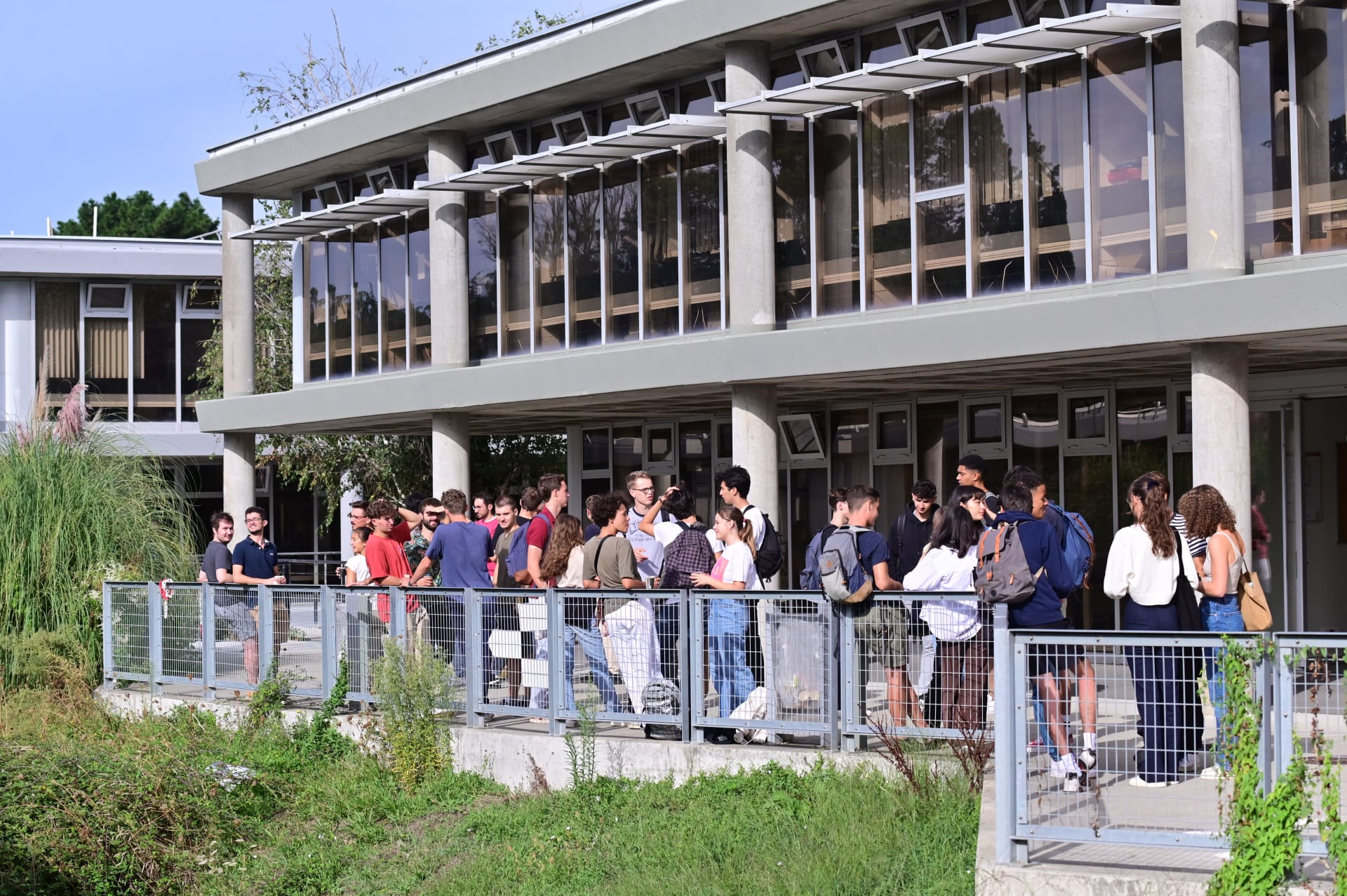
Centrale Nantes is a prestigious engineering school that awards degrees to engineers, master's students and doctoral candidates who have completed academic programmes based on the latest developments in science and technology and best management practices.
As a member of the Écoles Centrales Group (Lille, Lyon, Marseille, Nantes and Paris), our school provides high-quality education for highly selected students.
A public institution under the supervision of the Ministry of Higher Education, Research and Innovation, Centrale Nantes has more than 2,250 students, 500 employees and 600 temporary staff.
Context:
Created in 2016, the Joint Laboratory of Marine Technology (JLMT) is a partnership between Centrale Nantes and Naval Group. Its mission is to combine academic research and industrial expertise to provide innovations for Naval Group's applications in the field of shipbuilding. This collaboration aims to address the main challenges facing the maritime industry while contributing to national objectives in terms of competitiveness and energy transition.
After an initial extension in 2020, the partnership will continue beyond 2024 with a stronger focus on hydrodynamics. The main objective of this research area is to develop solutions to improve ship performance in extreme conditions.
In this context, a new research engineer position on ship load assessment is open at Centrale Nantes. The researcher recruited will contribute to the development of a multi-fidelity modelling tool in close collaboration with Naval Group.
Job description:
A ship must be able to withstand local and global loads that occur when sailing in irregular seas. Shipyards generally rely on rules developed by classification societies based on feedback and calculations made on a large number of ships. Another approach is to perform calculations to assess the loads on a specific ship. One difficulty lies in identifying the relevant input conditions to be tested. Several methods exist, such as the use of design waves or a Monte Carlo approach in irregular seas. Due to the cost of computation, it is not realistic to carry out this entire process using CFD simulations alone. Techniques have recently been developed to calculate design waves using multi-fidelity methods [1]. However, this approach is not straightforward in the case of complex physical phenomena such as impacts.
The current project aims to develop a multi-fidelity method for Monte Carlo-type analysis. Critical events will first be identified in irregular waves using a ‘fast’ seakeeping code, then the same wave field will be reproduced in a high-fidelity CFD calculation of wave-structure interaction around this event.
The objective is to develop a multi-fidelity tool based on a ship system simulation tool, ‘Xdyn’ [2], and a CFD solver developed within the OpenFOAM framework [3].
The methodology for a given ship and environment is as follows:
First, perform a simulation with Xdyn in irregular swell. The irregular waves will be provided by the HOS potential solver [4] developed at the École Centrale de Nantes;
Identify, within this simulation, the critical events for local or internal loads using indicators and thresholds defined jointly with Naval Group;
Extract an initial condition for the ship simulation in the CFD framework (starting before the event);
Reproduce the event with the CFD solver and correct the load assessment.
Wave generation in the CFD solver using HOS-Ocean and HOS-NWT is already operational [5][6]. The most important aspect of the project is the development of the complete tool, but other topics will also be addressed, including:
the choice of the ‘right’ indicator and associated threshold to identify critical events;
the study of methods for releasing ship movements in CFD calculations or, if necessary, imposing them;
the calculation of local and internal loads (a methodology already exists);
the validation of the CFD code for impact phenomena and the development of the best associated numerical configuration (limiters, boundary conditions, free surface modelling, etc.).
The tool will then be tested on an application of industrial interest.
Secondary activities and tasks of the position
Participate in project meetings related to the subject
Write progress reports
Participate in the promotion of the department's technologies and laboratory life.
Be involved in the software development process of the laboratory and the team
References
[1] Dermatis, A., Lasbleis, M., Kim, S., De Hauteclocque, G., Bouscasse, B., & Ducrozet, G. (2025). A multi-fidelity approach for the evaluation of extreme wave loads using nonlinear response-conditioned waves. Ocean Engineering, 316, 119919.
[2] https://github.com/sirehna/xdyn
[3] Descamps, T. (2022). Numerical analysis and development of accurate models in a CFD solver dedicated to naval applications with waves (Doctoral dissertation, École centrale de Nantes).
[4] https://gitlab.com/lheea/HOS-Ocean
[5] Kim, Y. J., Canard, M., Bouscasse, B., Ducrozet, G., Le Touzé, D., & Choi, Y. M. (2024). High-order spectral irregular wave generation procedure in experimental and computational fluid dynamics numerical wave tanks, with application in a physical wave tank and in open-source field operation and manipulation. Journal of Marine Science and Engineering, 12(2)
[6] Descamps, T., Elsayed, O., Bouscasse, B., Lasbleis, M., & Gouin, M. (2025). Validation and verification applied to CFD simulations of ship responses to regular head waves with forward speed. Ocean Engineering, 320, 120177.
Job requirements
Technical skills:
Experience is required in the following areas:
Use of CFD codes, particularly OpenFOAM
Development of numerical models
Programming (C++)
Scientific publication
B2 level English
In-depth knowledge of fluid mechanics is required.
Adaptability skills:
Use of different analysis tools
Organisational skills:
Autonomy
Initiative
Interpersonal and social skills:
Ability to work interactively with several teams
Open-mindedness
Required qualifications: You hold a PhD in naval hydrodynamics, ocean engineering or applied mathematics and have initial successful experience in this field.
Nature of the position
18-month fixed-term contract
Position open to contract workers and civil servants
Category A - IGR
Full-time position – based in Nantes
Occasional travel required (conferences, meetings)
Occasional teleworking
Teleworking allowance
Flexible working hours
Adjustable work cycles (possibility of working 4.5 days)
RTT + additional leave
Free parking
75% transport reimbursement
Sustainable mobility bonus (if cycling or carpooling)
Remuneration: according to the French civil service pay scale
Position available: March 2026
HR contact: Eloïse LEHOUX
Manager contact: Benjamin BOUSCASSE
This advertisement refers to the terms ‘candidate’, “engineer”, ‘manager’, etc. These terms are to be considered gender-neutral and apply to both women and men.
or
- Nantes, Pays-de-la-Loire, France
All done!
Your application has been successfully submitted!